Baseline vs mastery in Tattooing
2.11.26
And Why the Difference Isn’t Always Obvious in Vermont
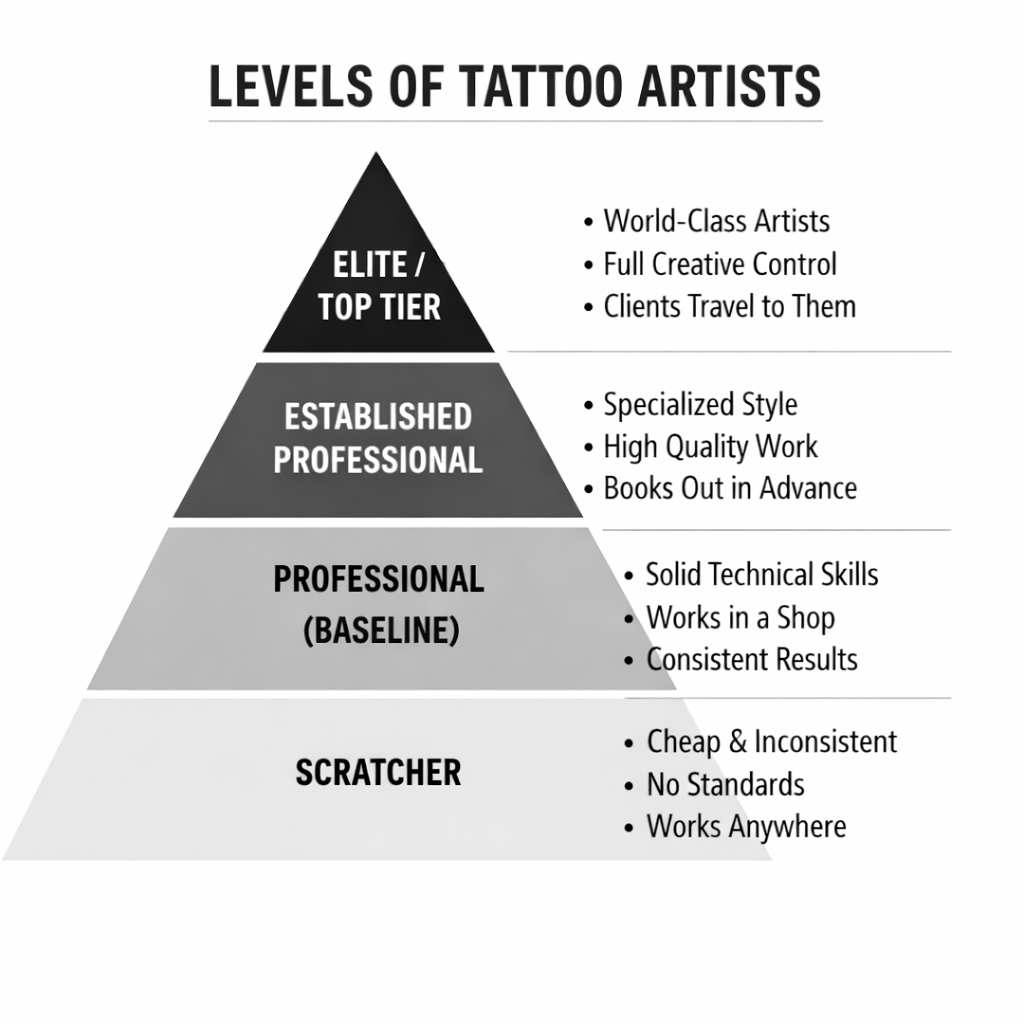
I’ve been talking about standards in Vermont for years. At this point I probably sound like a broken record about testing and competency requirements. But here’s why I keep bringing it up: Tattooing isn’t one flat category. There are levels. And because Vermont doesn’t have standardized skill testing or tiered licensing, the line between those levels gets blurry to the public. So I’m going to break it down the way I see it — into four broad categories. This isn’t about insulting anyone. It’s about helping clients understand what they’re actually choosing.
Level 1: Scratcher Yes, I’m using the word. Traditionally, “scratcher” meant someone tattooing out of their house with no license. But in a state without standardized testing, someone can legally operate and still be working at a scratcher level of skill.
Common traits:
💩Very low pricing
💩Takes whatever the client asks for (even if its a poor decision)
💩No clear artistic identity
💩Portfolio inconsistency
💩May apply ink but doesn’t demonstrate refinement
💩Little to no brand, infrastructure, or long-term presentation
The biggest misconception: If it looks “okay” and it healed, it must be good. Application is the baseline. Longevity, composition, contrast, and refinement are separate things.
Level 2: Professional (Baseline Competency) This is where the term “professional” gets misunderstood.
Professional should mean:
⭐️Clean setup
⭐️Proper shop environment (no drugs, etc)
⭐️Consistent sanitation
⭐️Technically applied tattoos
⭐️Reliable healing
But here’s the important part: Professional is the starting line — not the finish line. A tattoo can be applied correctly and still not be high-level art.
At this level, artists often:
⭐️Take most client ideas
⭐️Work across multiple styles
⭐️Focus more on execution than specialization
There is nothing wrong with this level. It’s just important to understand what it is.
Level 3: Established Professional / Specialist
This is where specialization begins.
Characteristics:.
🏆Recognizable style
🏆Consistent portfolio
🏆Turns down projects that don’t fit
🏆Higher pricing
🏆Books in advance
🏆Focus on larger or cohesive work
At this level, you’re not just ordering a tattoo. You’re commissioning an artist. That means less control for the client — but stronger design and cohesion overall.
Level 4: Elite / Top Tier
This is the small percentage.
Traits:
👑National or international recognition
👑Awards or convention visibility
👑Waitlists
👑Full creative control
👑Clients travel to them
👑Work that sets trends rather than follows them
At this level, clients are investing in vision.
Why This Is Hard to See in Vermont
In states with standardized competency exams or tiered licensing, there’s at least some structural separation between entry level and mastery. In Vermont, we don’t have that. So the public sees:
A license
A shop
A healed tattoo
And assumes all “professionals” are operating at the same level. They’re not. And that’s not an insult. It’s reality in any craft — painting, surgery, architecture, mechanics, you name it. There are levels everywhere. Tattooing is no different.
ROCK CITY TATTOO
65 ELM STREET
BARRE, VT 05641